Global experience, passion for public service: meet Associate Professor Kim Moloney, ANZSOG’s new Academic Director of Programs
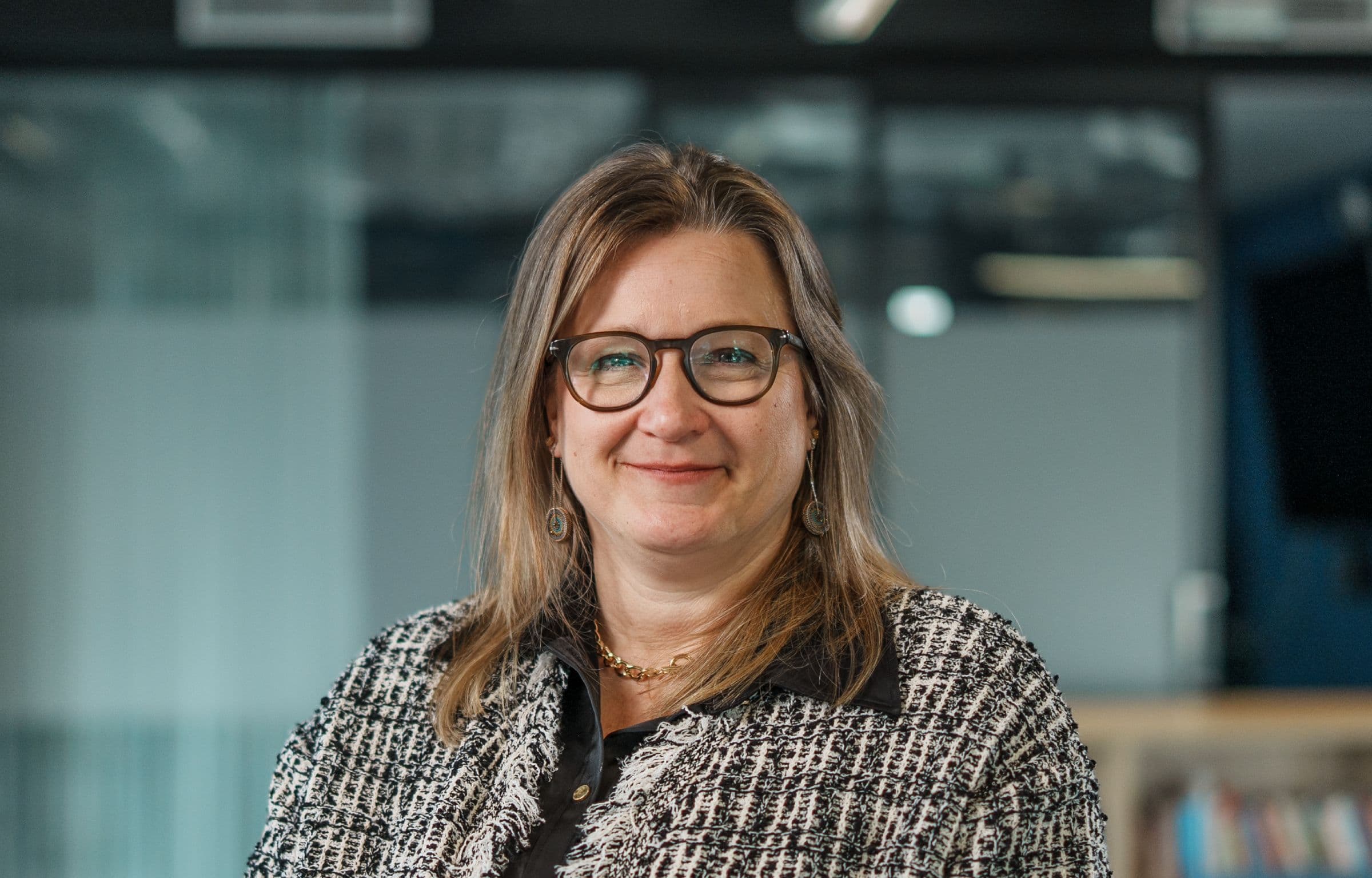
Associate Professor Kim Moloney’s path to public administration was far from conventional. As a young student, she dreamed of following in the footsteps of primatologist Jane Goodall, but her studies in international affairs, economics and African studies ultimately led her in a different direction.
Through work and travel in her twenties, including short working abroad stints in Kenya, Zambria, Peru, New Zealand, and the United Kingdom, she came to realise that the real work of foreign affairs happened behind the scenes through policy development, administration, and stakeholder engagement.
Encouraged by a mentor to pursue a Master of Public Administration, she earned that degree and then later, a Ph.D. in Public Administration too. This has led to a career that has spanned government, academia, and the non-profit sector. Her deep and enduring interest in the public interest and the public sector is a common thread throughout her journey.
Originally hailing from the U.S., Associate Professor Moloney joins ANZSOG in October, where she will pick up the reigns for the academic delivery of ANZSOG’s learning programs - in particular the flagship Executive Master of Public Administration (EMPA).
She brings a strong passion for public service and extensive international experience to the role, having held senior academic roles at universities in Australia, Jamaica, the United States, and South Korea, and most recently at Hamad Bin Khalifa University in Qatar where she successfully led its Master of Public Policy through external accreditation processes in the United States and Europe.
Her academic work has focussed on the intersection of public administration, comparative administration, transnational administration, and social equity, with a focus on emerging policy challenges for national and global administrations. The global nature of her academic research and teaching along with her non-academic experiences have led her to gain a unique perspective on how public administration operates under a range of different government systems.
"What I've learned across various countries is that a 'service to the public', its related public values, and the public interest are often shared across countries, regardless of religion, culture, economical orientation, or political system."
In particular, she says she has enjoyed pursuing the boundaries of what is public administration and what is public policy, and how the answer varies by region, by political system, and across time and culture.
In the case of her role with ANZSOG, she believes that "Understanding the public sector and defining the public interest, within the context of Australia and Aotearoa New Zealand, is important for our future. Not only understanding the values that we take forward, but how we're going to turn them into plans, projects, and services."
Associate Professor Moloney said she had always been fascinated by the link between academic knowledge and public sector practice, and how to strengthen engagement between the two sectors.
“What is important is the accumulation of knowledge over time about public administration and public policy, because through that accumulation of knowledge that we can make important changes while encouraging literacy of future sector needs. That's not done in an academic silo, it is done in consultation with others in the public sector, the non-governmental spaces, and the community,' she said.
How the public sector environment is getting more complex
Associate Professor Moloney said effective public sector leaders were more vital than ever in the current environment.
"The public service is a service to the public as a whole, not to one person or to one group. We need the private sector, but by its very nature, businesses are less interested in a society as a whole and more interested in people as customers, not citizens," she said.
"The public sector provides public goods. That's education, healthcare, road networks, national defence, and more that are available to all, not just those who can afford that service.
“Today's leaders are operating in an environment in which fiscal resources are scarce, public sector capacities may not be growing rapidly enough, and where political and ideological challenges alter policymaking.
"Public servants face significant challenges. They must lead within environments of uncertainty, navigate competing interests, and build trust across divergent sets of actors and priorities. They need to exercise ethical judgement while creating lasting public value, all within an environment of fiscal uncertainty, political risks, and crisis-influenced environments."
She said that during her tenure at Perth’s Murdoch University, she had the great fortune to interact with public servants from the Western Australian state government.
“Some of the policy and administrative challenges experienced by Western Australia during COVID-19 were different to the challenges experienced by eastern states, and it brought home to me the importance of contextualising national objectives across local realities and knowledges."
"It's really important that when we're thinking about our EMPA, that we're thinking not just national, but also trying to understand the contextual differences amongst jurisdictions and their sectoral interests," she said.
On joining ANZSOG and shaping the public sector leaders of the future
“It's an honour to join ANZSOG to not only engage the faculty who are our subject leaders, but also to work with a wealth of public sector officials and other guests who will shape the learning experience by sharing information from their sector, from their jurisdiction and/or their various work backgrounds. This will lead to really exciting conversations with students in the classroom,” Associate Professor Moloney said.
She says systems leadership, collaboration, crisis-readiness, fiscal resilience, and empathy will be some of the most defining traits needed for future public sector leadership.
"I firmly believe that public sector leaders are made, not born. Everyone can learn leadership skills that complement their sectoral or jurisdictional experience, and the skills required in today's world to collaborate with citizens, stakeholders and other actors."
“That’s what I am hoping to achieve through my role here at ANZSOG – to support the system leaders of tomorrow to shape reforms and transform systems, while being cognisant of local constraints, build future capabilities in a changing public sector environment, and to engage policy issues across levels of government, across sectors, and across jurisdictions,” she said.