How can researchers have greater policy impact?

Researchers in universities, think tanks and consultancies want to have greater influence on policy. According to an article in Policy Studies Journal, researchers seeking this policy impact often lack consistent strategies and measurement approaches. The article addresses these gaps by drawing on literature, practitioner expertise and real-world examples to answer four questions:
What does it mean to have policy impact?
How does research influence policy?
How can the impact of research on policy be evaluated?
How can researchers achieve greater policy impact?
It includes the case study of Australia’s e61 Institute’s research on non-compete clauses in Australian employment contracts to demonstrate how the article's principles help achieve policy impact.
What does it mean for research to have policy impact?
The article distinguishes between three levels of policy impact:
Level 1: Contributing to new conversations in policy. This is observed in stakeholder interactions with research.
Level 2: Contributing to the direction of the policy narrative. This includes starting a policy debate, reshaping a policy debate, or leading multiple stakeholders to support a policy position and form a coalition for policy change.
Level 3: Contributing to policy change. This includes creating and reforming policy, as well as stopping bad policy.
Two other dimensions need consideration – the size of the contribution and the timeframe of the contribution. Researchers should not assume that demonstrating larger research effects automatically leads to larger and faster policy influence. What is more important to the size and timeframe of the research contribution is the type of research and the policy cycle.
How does research influence policy?
It is convenient to conceptualise the impact of research on policy as a linear process where research is taken up by policymakers if it is communicated effectively. In practice, research and policy have a bi-directional and iterative influence. Research and policy influence each other iteratively throughout the policy cycle, with each piece of evidence shaping both the debate and subsequent research questions.
There are four models of research-policy relations:
Knowledge shapes policy (supply side): Research is produced and communicated effectively to policymakers who use it to inform decisions.
Politics shapes knowledge (demand side): Policymakers identify priority questions and commission or seek out relevant research.
Co-production: Trusted partnerships between researchers and policymakers jointly produce knowledge.
Autonomous: Researchers and policymakers operate in distinct spheres, and policy only appropriates knowledge when it can be used symbolically to give authority or meaning to political objectives (i.e. research is cherry-picked).
Research-policy relations
Researchers should aim to implement the supply, demand, and co-production models according to the type of research and political and policy context. The autonomous spheres model represents what researchers should aim to avoid.
Supply-side strategies to increase research uptake include:
Timely insights about key issues: Individual researchers should select research questions that meet two criteria: (1) the questions fill gaps in knowledge or have the potential to overturn conventional wisdom; and (2) the policy implications of the research will make a material difference to people’s lives.
Long-term engagement: At all stages of research development, sharing insights with policymakers and other participants in the policy debate through media and direct engagement is crucial. Because policymaking is not a systematic production process into which research is routinely used, long-term engagement helps ensure research is considered when policymakers are receptive and can be applied to current policy challenges.
Strategic engagement: Engaging policymakers and intermediaries who are champions of independent research increases the likelihood they will diffuse research into the debate. This includes crossbenchers who lack their own research teams and interest groups who seek out independent research to make their advocacy more persuasive.
User-friendly and salient outputs. It is essential to produce different research products for different stakeholders—tailored to meet their needs, solve their pain points, and attract their attention in a noisy policy environment.
Evaluating the impact of research on policy
The article suggests contribution analysis to evaluate impact. Contribution analysis allows claims of contribution (not attribution) when there is evidence for all the steps that are said to occur between an activity (e.g. academic publication) and outcome (e.g. policy change). Contribution analysis relies on a theory of change to be developed prior to data collection.
Every researcher’s and research organisation’s theory of change will differ based on their context and approach. There will often be multiple pathways of influence and dynamic feedback loops. Figure 1 is a simplified version of the e61 Institute’s theory of change to illustrate how mechanisms connect a research organisation’s activities to policy impact. The orange box highlights the two mechanisms that must be activated for policy conversations, narrative shifts, and decisions to occur: (1) credible Institute and (2) easy-to remember insights. Being able to recall trusted insights helps policymakers act on e61’s research when they have competing demands in a sea of information.
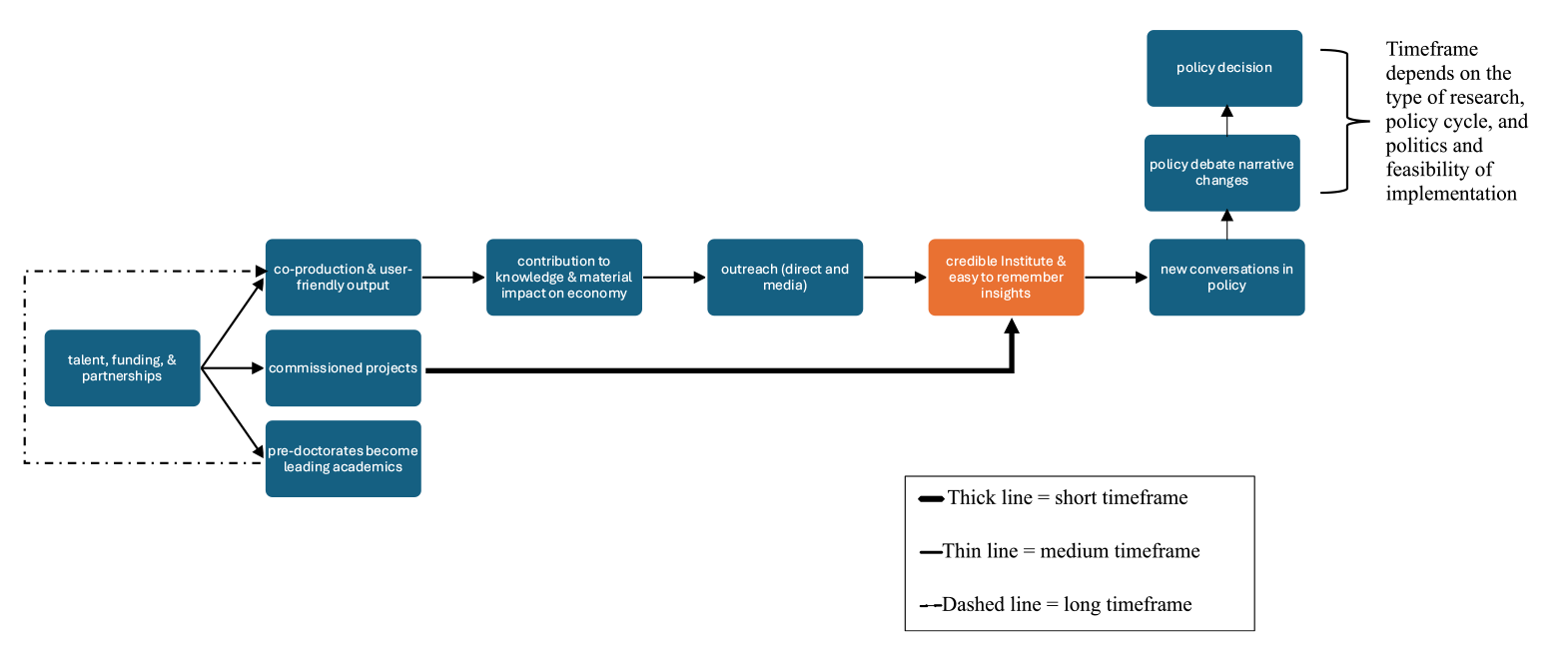
Figure 1: Simplified version of e61 Institute's theory of change
The bottom line
Research is more likely to make a difference when it is relevant to policy priorities, communicated in ways that meet policymakers’ evidence needs, and developed through trusted relationships and collaboration. For researchers, this means looking beyond dissemination to understand the policy context, engage early, build partnerships and contribute to policy conversations over time. For research organisations, it means creating the structures, incentives and resources that make this work possible.
Want to read more?
How can researchers have greater policy impact? – Kizzy Gandy, Policy Studies Journal, March 2026
The full journal article for this Research Brief is available via individual or institutional access through a library service such as a university library, state library or government library.