Gain practical skills and knowledge to help you work with First Nations communities
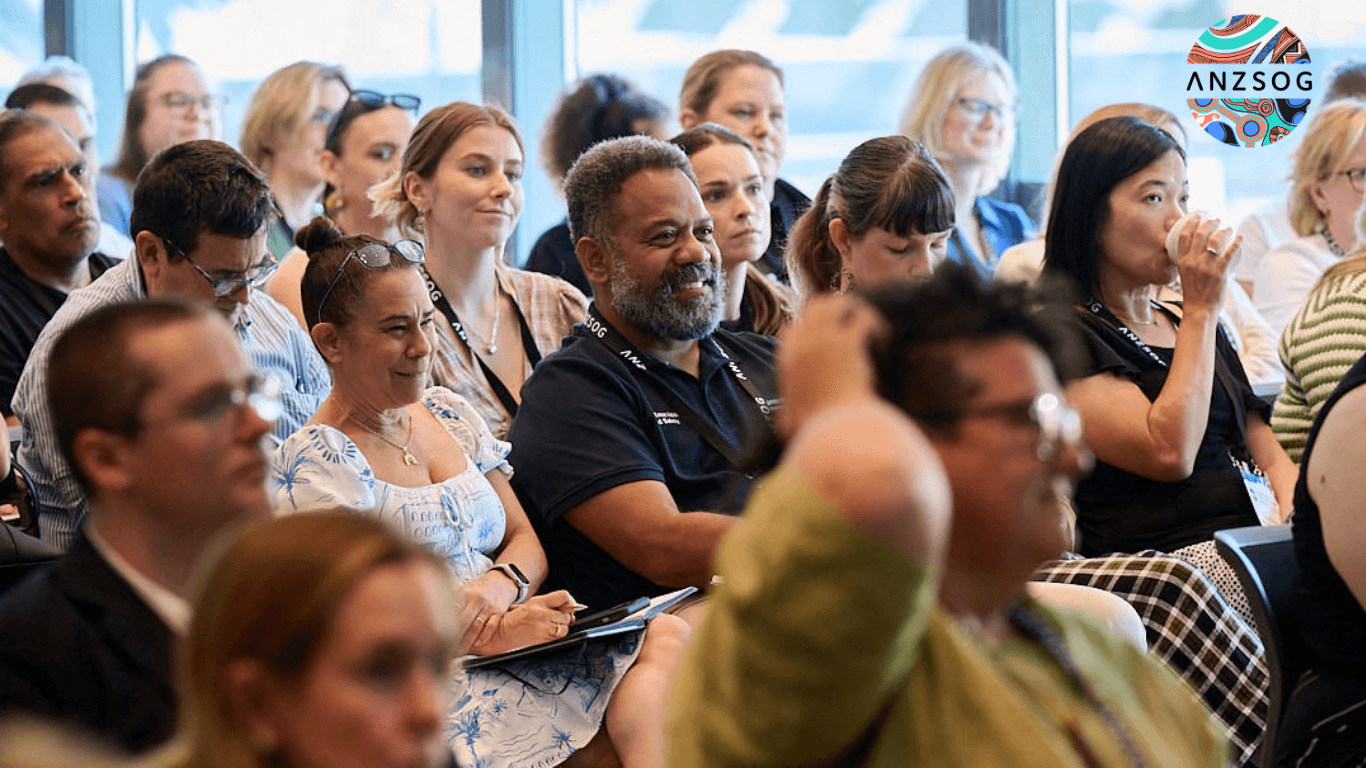
Learning how to work in partnership with First Nations communities is core business for every Australian public servant.
ANZSOG’s Working with First Nations: Delivering on the Priority Reforms program was established in 2023 to meet demand from public services wanting to understand how to embed the National Agreement on Closing the Gap – which has been signed by all Australian governments - into their work.
The program has now helped hundreds of public servants gain a basic understanding of Aboriginal and Torres Strait Islander perspectives, and practical guidance how to build genuine partnerships with First Nations communities that deliver better outcomes.
Working with First Nations is returning in 2026 and will again be presented by Geoff Richardson PSM and Professor Catherine Althaus, supported by a range of guest experts, who bring a mix of academic and practitioner experience to First Nations issues.
They aim to turn rhetoric into reality and give participants strategies to change the way they and their agencies work in the short and long-term.
Professor Althaus said that there had been even more movement in jurisdictions in the past year towards formal recognition of First Nations self-determination and the importance of the National Agreement on Closing the Gap.
“Victoria has signed their Treaty, which is a historic moment, and the ACT has shifted to including principles of the National Agreement as a requirement for the public service.
“It's great seeing some of the initiatives that are happening at a jurisdictional level. They are signalling formally what we've been trying to say to people informally – that the National Agreement is not just everyone’s responsibility but an opportunity.”
She said that since WWFN started in 2023 there had already been a maturity in the public sector around First Nations issues, and a growth in knowledge and understanding.
“We've noticed over time that people are coming in with a bit more experience and preparedness to be bit more transparent about what's working, and what's not working,” she said.
Professor Althaus said a major part of the program was encouraging people to take a more relational, rather than transactional approach, to working with First Nations, and to take up the challenge to trust and engage with communities in a different way.
“It's staying true to the basics of what the reform agreement actually requires the public servants, what they can do in this space and how that can make a positive impact,” she said.
“As well as a deeper understanding of First Nations culture and history, they will gain very concrete tools in areas such as who they can reach out to for help, or understanding how different sectors operate.”
“The resources and connections they get are unbelievable. There's so much they can continue to turn back to, and remind themselves of, and contacts they can chat with about issues or work on a potential collaboration”
Being part of the transformation of government
The WWFN program follows the four Priority Reforms of the National Agreement on Closing the Gap (2019-2029), which outline a new approach to government: formal partnerships and shared decision making; building the community-controlled sector; transforming government organisations; and shared access to data and information.
Geoff Richardson is a descendant of the Meriam people of Murray Island (Mer) in the Torres Strait and the Kuku Yalanji/Djabugay peoples of North Queensland. He spent 40 years in the Australian Public Service, including 22 years at SES level, all in the Aboriginal and Torres Strait Islander Affairs portfolio. After retiring, he established First Nations Development Services as a vehicle to continue his work connecting Governments with Aboriginal and Torres Strait Islander communities.
“The aim of the program is to help public servants realise the power they already have to identify the barriers and impediments to closing the gap and to influence transformation in the system you work in,” he said.
“We also want to encourage you to work on your capability so you can work in partnership with Aboriginal and Torres Strait Islander Peoples. Closing the Gap is possible, but it is not going to happen without a significant change in the way we do business.
“Reforming a system that has evolved over many, many decades will take time and significant goodwill and effort. There's been mountains of goodwill from governments at all levels, so it’s not just a case that people don’t care. It’s that reforming the system is complex.”
Mr Richardson said that public servants needed to be able to engage with communities and create relationships that allowed First Nations people to influence how resources are spent.
“We talk a fair bit about partnering. Trying to ensure that Aboriginal and Torres Strait Islander people have a say in where funding goes. Not just funding to their particular community, but helping governments make more strategic decisions about broader funding allocations.”
Guest presenters who will bring their practical experience and subject knowledge to the next iteration of Working with First Nations include:
Donnella Mills, Chair, National Aboriginal Community Controlled Health Organisation (NAACHO)
Catherine Liddle, CEO, SNAICC- National Voice for our Children
Katie Kiss, Aboriginal and Torres Strait Islander Social Justice Commissioner
Wayne AhBoo, CEO, Institute for Urban Indigenous Health
Dr Jacob Prehn, Director of Research, Evaluation and Data Governance, Treaty Authority, Victoria
Professor Althaus said that, as well as gaining valuable skills and ideas, the program was a space for people to share the difficulties they faced in the challenging work they were doing.
“The program has been a space for people to be able to share in a safe environment. They can actually say ‘this is really hard’ or ‘I don't know what to do’ and it's okay. People have found it really helpful to share those anxieties and difficulties.”
“This year with we will have a new focus at the beginning, where participants would talk about their motivations, and why they were passionate about their work, as well as sharing the difficulties they are facing.”
“With the evolution of the program, we are also now able to bring back past alumni who can talk to the current cohort about how they are now able to make a difference in their work.
“You could do a whole course on each of those priority reforms. But this is an important foundational launchpad which has given people the confidence and skills to make a difference.”
Registrations are now open for both 2026 deliveries of Working with First Nations: Delivering on the Priority Reforms – with early bird pricing available for a limited time.
The online program begins with an orientation session, followed by six 2.5 hour facilitated sessions with Geoff, Catherine and guest presenters. Designed to be dynamic and engaging, the program supports participants to translate learning into meaningful, practical change.
The first 2026 delivery runs from 29 April to 10 June, with a second delivery from 13 October to 19 November.
Register early to secure the early bird rate – visit the ANZSOG website for details or contact engage@anzsog.edu.au.