Breaking down silos to work more effectively with First Nations
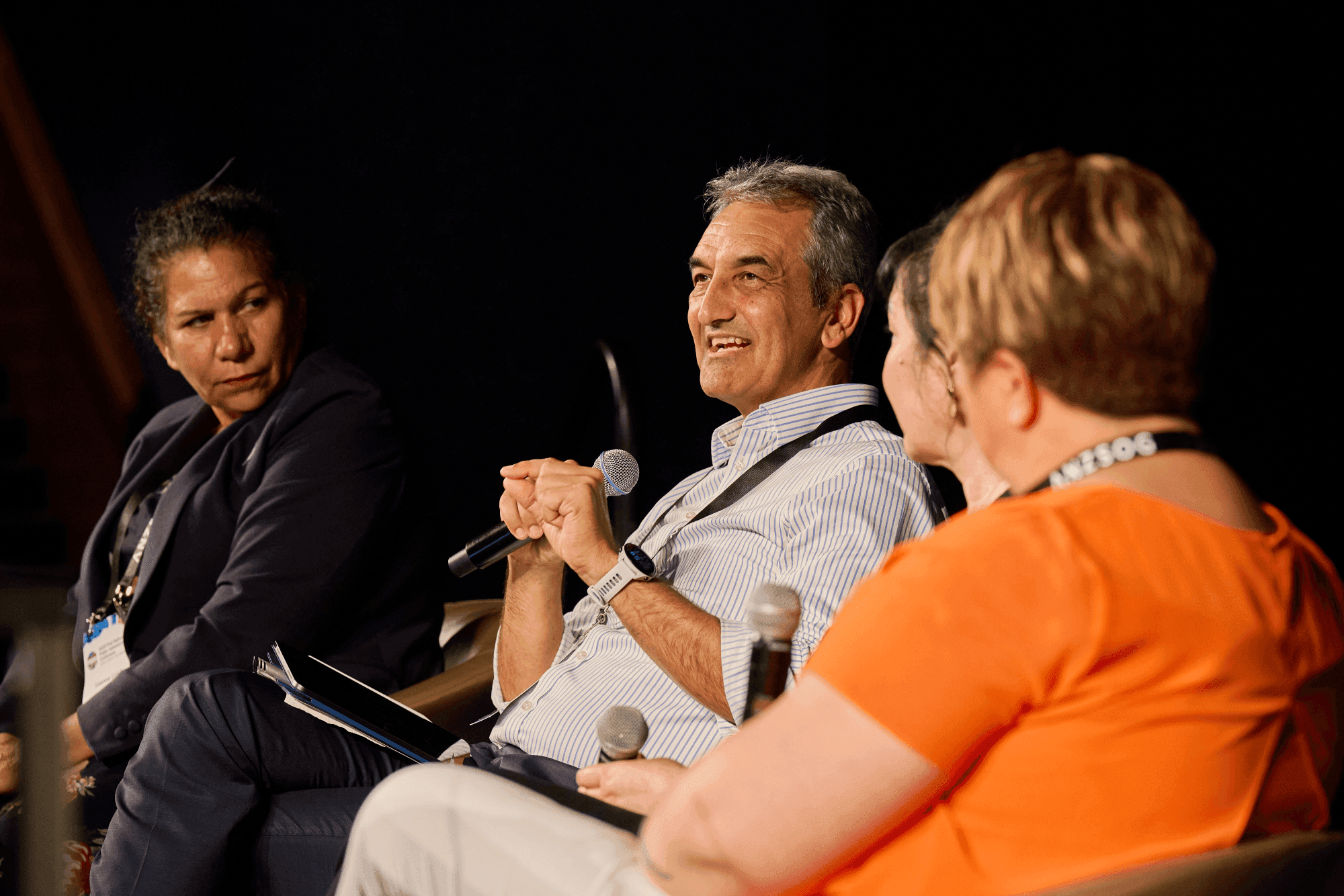
Working within existing government silos will never be enough to make real progress in First Nations policy.
Public servants in all agencies need to think differently about how they work, and make the cultural, structural and organisational changes needed to deliver on the promise of the National Agreement on Closing the Gap – which has been agreed to by all Australian jurisdictions.
ANZSOG’s Working with First Nations: Delivering on the Priority Reforms program is returning in 2026 and will again be presented by Geoff Richardson PSM and Professor Catherine Althaus, supported by a range of guest experts, who bring a mix of academic and practitioner experience to First Nations issues.
The program has now helped over 500 public servants gain a basic understanding of Aboriginal and Torres Strait Islander perspectives, and practical guidance on how to Close the Gap by building power-sharing partnerships with First Nations communities that deliver better outcomes.
Mr Richardson said that progress on delivering on the promise of the National Agreement had been slow – not due to a lack of goodwill, but the difficulty of making major transformations of government agencies work with First Nations.
“The problem is not a lack of goodwill, it’s the complexity of the challenge, and not knowing what to do about it. Closing the Gap requires a major shift in mindset and applying more effort within the silos, won’t achieve the goal.”
“Since we started delivering the Working with First Nations Program, we have noticed an increase in intensity towards implementing the National Agreement, but there doesn’t appear to be enough momentum across the three levels of government (Federal, State and Local) to drive the reform agenda.”
Breaking down silos and strengthening First Nations capacity
Mr Richardson said the system as it stands is configured in agency silos each with its specific set of deliverables.
“The health department has the health of the nation's citizens as their remit and might have enormous understanding of the health system, but they don't control housing, they don't control education, they're not responsible for a whole lot of subject matter that is critical to a person's overall health.
“It's very hard to break these silos down, because all the rewards, the deliverables, and the accountabilities, are geared to the structures and the silos. That configuration makes it a disincentive to work outside your silos.”
“The National Agreement is only a framework. It requires some serious, clever thinking, not just by bureaucrats, but in partnership with Aboriginal and Torres Strait Islander people, about how we break down these silos that are stopping progress.
He said that improving understanding of First Nations and the National Agreement was part of every public servant’s job.
“Only 20% of the total funding that is directed at Aboriginal and Torres Strait Islander people is provided through Indigenous specific programs. The other 80% is delivered through mainstream programs, and we are going to get so much more traction if that 80% is administered in a way that takes First Nations people into account.”
“We need governments to work in a relational way, not a transactional way, and need them to adopt a developmental mindset focused on strengthening the capacity and capability of Aboriginal and Torres Strait Islander People and their communities, not just deliver passive services.”
Deeper understanding, practical focus
Mr Richardson said this year's delivery of Working with First Nations, while focused on giving participants ideas to apply immediately to their work, would be more interactive and dive deeper into participants’ experiences of working with First Nations.
“Programs like this enable people to come together to talk about barriers, and how challenging the work is, and that's what we're going to try and do even more for the upcoming program.”
Guest presenters who will bring their practical experience and subject knowledge to the next iteration of Working with First Nations include:
Donnella Mills, Chair, National Aboriginal Community Controlled Health Organisation (NAACHO)
Catherine Liddle, CEO, SNAICC- National Voice for our Children
Katie Kiss, Aboriginal and Torres Strait Islander Social Justice Commissioner
Wayne AhBoo, CEO, Institute for Urban Indigenous Health
Dr Jacob Prehn, Director of Research, Evaluation and Data Governance, Treaty Authority, Victoria
Working with First Nations co-presenter Professor Catherine Althaus said that there had been even more movement in jurisdictions in the past year towards formal recognition of First Nations self-determination and the importance of the National Agreement on Closing the Gap.
“Victoria has signed their Treaty, which is a historic moment, and the ACT has shifted to including principles of the National Agreement as a requirement for public service leaders.
“Working with First Nations is an important foundational launchpad which has given people the confidence and skills to make a difference in this environment.”
“As well as a deeper understanding of First Nations culture and history, they gain very concrete tools in areas such as who they can reach out to for help or understanding how different sectors operate.”
Mr Richardson said that Working with First Nations would give participants the confidence and basic knowledge to be part of the transformation that was required at the structural, organisational and cultural levels of organisations.
“Transformation requires change of systems, processes and people. If you miss any of those three elements, or you don't get them synchronised, you're not going to get changes that become embedded in the organisation.”
“We want participants to leave the program with a commitment to embracing the challenge of being bold and innovative in their work and continuing to build their own understanding of Aboriginal and Torres Strait Islander society.”
Registrations are now open for both 2026 deliveries of Working with First Nations: Delivering on the Priority Reforms – with early bird pricing available for a limited time.
The online program begins with an orientation session, followed by six 2.5 hour facilitated sessions with Geoff, Catherine and guest presenters. Designed to be dynamic and engaging, the program supports participants to translate learning into meaningful, practical change.
The first 2026 delivery runs from 29 April to 10 June, with a second delivery from 13 October to 19 November.
Register early to secure the early bird rate – visit the ANZSOG website for details or contact engage@anzsog.edu.au.