Mānawatia a Matariki (Happy Māori New Year) for 2026!
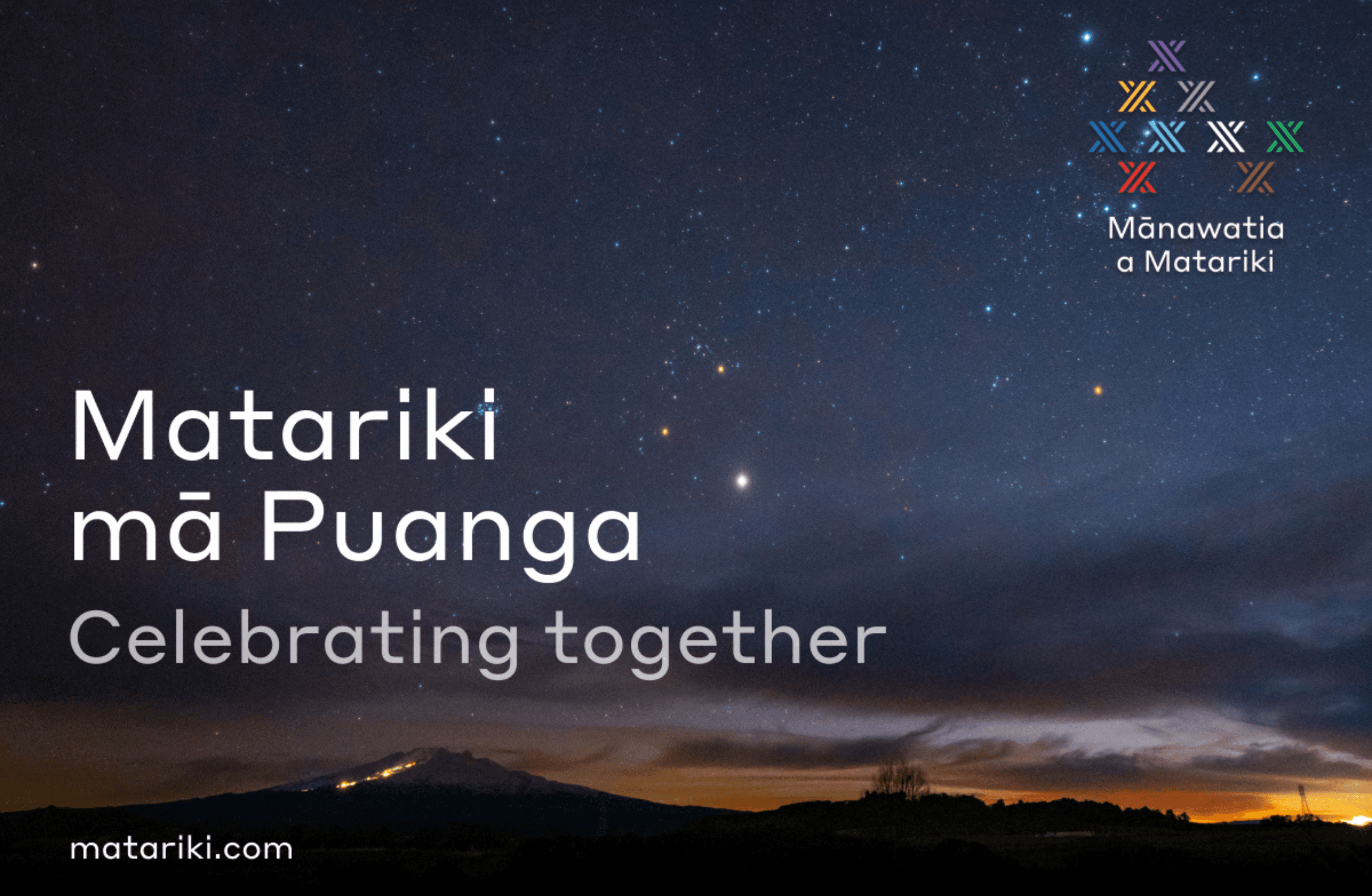
On Friday 10 July, all of Aotearoa New Zealand will mark a public holiday for the Māori festival of Matariki, which celebrates the start of the Māori New Year.
Matariki runs from 4 -19 July in 2026, and is a special time for Māori living in Aotearoa and Australia, with public celebrations and festivals that bring communities together, with a focus on food and Māori culture.
Matariki has been celebrated as a public holiday in Aotearoa since 2022, and is the first holiday in either Australia or Aotearoa to be based on a First Nations celebration.
Faculty spotlight: Kirikowhai Mikaere, Lead Technician of the Data Iwi Leaders Group and Chair of Tūhourangi Tribal Authority
Kirikowhai Mikaere is the Founding and Managing Director of Development by Design in Aotearoa New Zealand. She is a leading Māori data and information specialist whose work focuses on using data to empower iwi, hapū, whānau and Māori community development.
Kirikowhai has advised Ministers, government agencies, tribal, community and private sector organisations, and is recognised for her contribution to Māori data sovereignty and practical, place-based data solutions.
Kirikowhai marks Matariki with her whānau, beginning early in the morning by looking for the Matariki star cluster. Around their fire hub, they reflect, acknowledge and share karakia for family and friends they have lost over the past year, before speaking to their aspirations for the year ahead and sharing a special celebratory breakfast feast.
This year, her iwi, Tūhourangi, will hold its first hautapu at Tarawera, where members of her tribe will lead the iwi through ceremony.
Faculty spotlight: Chappie Te Kani, CEO, First Peoples Assembly of Victoria’s Self-Determination Fund
Chappie Te Kani is CEO of the First Peoples Assembly of Victoria’s Self-Determination Fund, where he is leading work to strengthen First Peoples’ economic development, support equal footing in Treaty negotiations, and help build wealth and prosperity for current and future generations.
He brings more than two decades of experience across public policy, economic development and Indigenous partnership, including senior leadership roles in the New Zealand Government.
For Chappie, this year Matariki has been a time to reflect on the importance of purpose, service and legacy. He is taking the opportunity to think deeply about the responsibility of leadership, while remembering those who have passed, celebrating the present and looking ahead to the future.
In his role as CEO of the Self-Determination Fund, Chappie has been using this period to reflect on how to build enduring intergenerational wealth and prosperity for First Peoples in Victoria. Matariki reminds him that the decisions made today should honour those who came before while creating greater opportunity for those who will come after — a perspective that shapes both his leadership and the work of the Fund.
Outside of work, Chappie has been spending time with whānau, reconnecting with friends and taking moments to slow down and reflect on the year so far and the one ahead.
What is Matariki?
Matariki is the Māori name for the cluster of nine stars (known in Europe as the Pleiades), which become visible in the Southern Hemisphere in June/July. Matariki follows a lunar calendar system and, like Easter, the date changes each year.
Matariki traditionally occurred after the harvest and was a time of relaxation and reflection. Traditions include songs, games, shared meals and offerings to tipuna (those who have passed).
In 2026, Aotearoa’s National Matariki celebration will take place in Tāmaki (Auckland region) and will be hosted by the Ngāti Whātua Ōrākei iwi (Māori tribe).
The theme for this year is ‘’Matariki herenga waka’ – which literally means ‘Matariki is a mooring place for many canoes’ and carries the broader meaning that Matariki is for everyone.
Matariki Chief Advisor Professor Rangi Mātāmua says that all New Zealanders are:
“Encouraged to view Matariki as a time to journey home, spend time with whānau (family) and friends, and enjoy feasting on fresh, locally sourced produce’.
“While the stars that mark the beginning of the Māori New Year may vary in some rohe (regions), the themes that underpin the ceremony and celebration are the same,” Professor Mātāmua said.
Matariki is often understood through three main themes that continue to guide celebrations today:
Remembrance – Honouring those we have lost
Matariki begins with a time of mourning, where families remember loved ones who have passed during the year. It is a chance to speak their names, share stories, and acknowledge their lives in a collective space of aroha (love).
Celebration – Giving thanks for the present
After remembrance comes celebration — a time to share kai (food), enjoy music and dance, and spend time with whānau (family) and friends. It’s a joyful moment of gratitude for life, health, and community.
Aspiration – Looking ahead with hope
The final theme focuses on the future. People make wishes, set goals, and plant seeds for the coming year — both literally and metaphorically. Children especially are encouraged to think about their dreams, their role in caring for the world, and the kind of future they want to create.
For more information on the meaning and wairua (spirit) behind Matariki, and different ways to celebrate, visit the official Matariki website, or read its Matariki Handbook, and check out the resources of Te Papa (Aotearoa New Zealand’s National Museum)
The stars of Matariki
Matariki can mean either ‘the eyes of god’ or ‘little eyes’, and while different traditions are practiced by different iwi (tribes), up to nine stars are acknowledged, each with its own association with some element of the natural world, or Māori culture.
Matariki is the star that signifies reflection, hope, our connection to the environment, and the gathering of people. Matariki is also connected to the health and wellbeing of people and is also the mother of the other stars in the cluster.
Waitī is associated with all freshwater bodies and the food sources that are sustained by those rivers, streams and lakes.
Waitā is associated with the ocean, and all food sources within it.
Waipuna-ā-rangi is associated with the rain.
Tupuānuku is the star associated with everything that grows within the soil to be harvested or gathered for food.
Tupuārangi is associated with everything that grows in the trees: fruits, berries, and birds.
Ururangi is associated with the winds.
Pōhutukawa is associated with those that have passed on since the last rising of Matariki.
Hiwa-i-te-rangi is associated with your dreams, desires and wishes, for the coming year.
Matariki is a great example of making First Nations traditions and culture central to a national celebration and ensuring that Māori are included in the ongoing story of Aotearoa New Zealand.
This year, Matariki celebrations will take many forms across Aotearoa New Zealand, and all peoples have the opportunity to come together, celebrate, show respect for the land they live on, and to share the Matariki tradition.
In Australia, the Sydney Observatory will hold a Matariki Celebration on 9 July, and other community events are held around the nation.
ANZSOG wishes you Mānawatia a Matariki (Happy Māori New Year) wherever and however you are celebrating.