Building BRAVE governance to create public trust
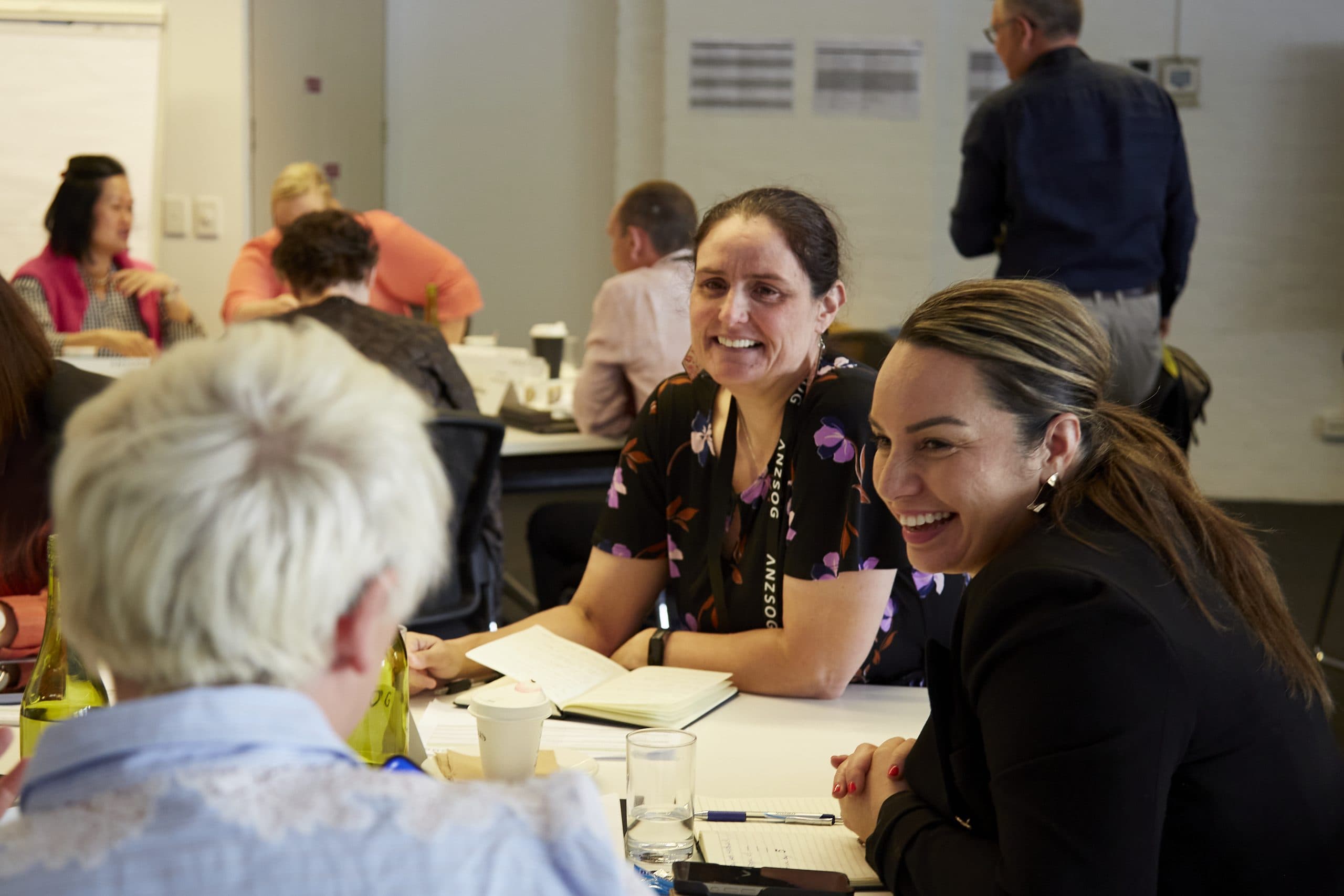
ANZSOG is looking to reframe the conversation about public governance and take a more positive and future-focused approach that gives public servants agency to shape the future, not just react to events.
We are building this conversation with the organisations and jurisdictions we work with. This article, by ANZSOG’s Senior Advisor Thought Leadership, Charlene Fle-Danijelovic, dips into some of those conversations, and uses the insights from public service thought leaders and our own Practice Fellows to outline a new framework for thinking about governance.
Most commentary on public governance starts with the challenging context of a world defined by acronyms like VUCA (Volatility, Uncertainty, Complexity, and Ambiguity), TUNA (Turbulence, Unpredictable Uncertainty, Novelty & Ambiguity), BANI (Brittle, Anxious, Non-linear and Incomprehensible), and the latest addition, RUPT (Rapid, Unpredictable, Paradoxical and Tangled). They paint a picture of volatility and fragility—a world where public institutions are constantly on the back foot.
The discussions led us to develop the concept of BRAVE governance – Balanced, Relational, Adaptive, Values-Driven, Engaged – which suggests an alternative, that focuses on how empathetic, humble and agile public servants can retake the initiative in the face of change and navigate complexity with courage and clarity.
How might we envisage a future where of public governance people trust? Let’s project forward. Picture this: in 2035 Aotearoa New Zealand and Australia are considered the ‘poster children’ for “Public Governance People Trust”. How would the public service be operating? What would citizens be seeing and feeling? How would our elected governments be feeling about the capability and responsiveness of their public servants? What would the world be saying about us?
At first glance, we would expect efficient services, transparent decision-making, and strong institutional integrity. We know already, from surveys like Aotearoa’s Kiwis Count, that the closer citizens get to services and the public servants delivering them, the more trust they have in the public service overall. The latest Aotearoa survey revealed that 80 per cent of New Zealanders trust the government service they most recently used. The equivalent figure from the recent Australian Public Service State of the Service report is 73 per cent.
But the future demands more than operational excellence. It calls for governance that is human-centred, adaptive, and innovative - anchored in values yet agile in the face of disruption.
Recently, ANZSOG convened three thought leaders - Dr Chris Sarra, Dr Karise Hutchinson, and ANZSOG Practice Fellow Martin Stewart-Weeks - to explore what that would mean in practice. They discussed what a future high performing public service leader would need to know, be able to do, and act, and what wider public service capabilities would be required. Facilitator, ANZSOG executive Evelyn Loh asked the panel to describe what that would look like in a headline. Here's what they said.
Chris Sarra: Values, Service, and Intercultural Agility
“Now is the time to reflect on who we are as public servants. Remember the notion to serve as part of being a public servant.” Chris emphasized staying loyal to good policy—even when political pressures mount—and building high-expectations relationships. He introduced the concept of intercultural agility: embracing differences with curiosity and compassion, not fear.
Karise Hutchinson: Leading in the Grey Zone
“We are in a series of grey zone episodes—balancing short-term pressures with long-term values.” Karise urged leaders to orient themselves to the now here, not nowhere. Her systems lens - me, we, all of us - will be a feature of the revamped Executive Fellows Program in 2026. Courage and creativity, she also argued, are essential for navigating complexity.
Martin Stewart-Weeks: Human, Humble, Hopeful
“We are in one of the great transitions of our time. The upside is massive opportunity for experimentation.” Martin framed the future in three words: human, humble, hopeful. He called for reconnecting the center with the edge—linking large institutions with grassroots innovation—and fostering a culture of experimentation.
We also invited Mr Martin and fellow ANZSOG Practice Fellow Sally Washington, to share their insights into what a future characterised by ‘public governance people trust’ would look like post-event.
Martin shared his views in an article where he further articulated the relationship between ‘the centre’ and ‘the edge’ as part of a future public governance operating model:
“… it pushes resources and power out from the centre and into the places and local contexts in which problems are being tackled. …The point of that distributed agency is to rapidly discover what it is about the larger system that gets in the way of those local solutions being implemented and sustained.”
“This practice-based rapid learning process is intended to send unmissable signals back up the line as a catalyst for system shift – which is the work of the centre, at least primarily. A system shift that not only makes those local solutions easier to implement and grow, but starts to change features of the system to make it easier for other similarly locally-focused innovators to build enduring solutions. ”
Sally shared her perspective in a short ‘starter for 10’ on some future characteristics of good public governance. She envisages it being:
1. Relational – public servants would be focusing on relationships, not transactions, collaborating with the wider ecosystem (First Nations & Māori, private sector, not for profit, community) and doing things ‘with’ not ‘to’ others in that ecosystem. Services would be delivered by who is best placed to do so, and where it makes sense. “Best placed and place-based”.
2. Joined -up – siloes would be bridged in policy, service delivery, and regulation to give a seamless experience and coherence across government.
3. Boldly Future focused – public servants would be responsive to the government of the day, but building towards longer-term outcomes, enhanced public value, and improved public sector capability. They would be ‘speaking truth to power’ and assuming ‘responsibility’ rather than sticking to narrow formal ‘accountability’. They would be flexing their ‘stewardship muscles’
4. Responsive, empathetic and inclusive - people would have their diverse needs met and their diverse voices heard, democracy and decision making would be more participatory. “One size fits all would be relegated to history”.
5. Innovative – Public servants would be encouraged to have new ideas and enabled to execute them. They would have decision rights down to the level of their competence and accountability. Risk would be tolerated and managed (not avoided). There would be a ‘learning state’ with an experimental, collaborative, test and learn culture.
6. Technologically enabled - AI and digital tools would augment rather than replace the capability of empathetic and ethical humans
7. Fit-for-purpose – the public service size and shape would be based on clear design principles. The organisational architecture would follow functional requirements, not driven by cuts or shifting the deckchairs without evidence of the likely impacts.
BRAVE: A new acronym for Future Governance
The insights from our panellists, academic and practice fellows converge around some common themes, which we’ve put together into a new positive acronym. The future of public governance will require leaders and institutions to be BRAVE - Balanced, Relational, Adaptive, Values-driven, and Engaged.
- Balanced Leadership that can navigate competing priorities and trade-offs without losing sight of long-term goals. Being balanced means knowing your people, joining up systems and applying political nous to deliver the right solution at the right time. It’s about coherence across policy, service delivery and regulation, and ensuring design choices are evidence-based and not reactive.
- Relational Moving beyond transactional approaches to build trust through relationships. Ensuring that public governance means doing with, not to; co-designing with communities, collaborating across ecosystems, and delivering services where they make sense. It’s about shared responsibility and genuine partnership.
- Adaptive Leadership that embraces complexity and uncertainty as opportunities for learning. Adaptive systems foster innovation, tolerate managed risk, and empower decision-making at the right levels.
- Values-driven Anchoring decisions in integrity and purpose. Values-driven leadership ensures diverse voices are heard and needs met, moving beyond one-size-fits-all approaches. It prioritises fairness, empathy, and ethical stewardship, even under political pressure.
- Engaged Engagement means listening actively and creating participatory democracy. It’s about transparency, openness, and building trust through shared problem-solving.
BRAVE is not just an acronym – it could serve as a practical compass that can link leadership capabilities to system design principles and articulates some key characteristics for future public governance.
The future of trusted public governance will not happen by chance. It requires deliberate choices - starting now. ANZSOG will continue convening voices, sharing insights, and building capabilities to help governments design and deliver governance that people trust. Join the conversation. Shape the future.